Author name: Stabrez

Start Earning Online Now
Money

Start Earning Online Now: 10 Proven Ways to Make Money from Home

Start Earning Online – Your Step-by-Step Guide to Financial Freedom: The digital age has revolutionized how we work, learn, and earn. Today, over 1.45 billion people globally are freelancers, remote workers, or entrepreneurs leveraging online platforms to build income streams. If you’re ready to start earning online and unlock financial freedom, this guide will walk you through actionable strategies, tools, and mindset shifts to succeed. Whether you want to escape the 9-to-5 grind, supplement your income, or build a scalable business, the internet offers endless opportunities. Let’s dive into the proven roadmap to turn your goals into reality. The Digital Economy Makes It Easier Than Ever to Start Earning Online The global digital economy is projected to reach $23 trillion by 2025 (Statista), creating unprecedented opportunities. Remote work, e-commerce, and AI-driven platforms have lowered entry barriers, enabling anyone with skills and determination to start earning online. For example: Financial Freedom Awaits When You Start Earning Online Unlike traditional jobs, online income streams can scale exponentially. Take Sarah, a graphic designer who started freelancing on Upwork. Within a year, she tripled her income by attracting international clients. Similarly, affiliate marketers like Pat Flynn earn six figures monthly by promoting products. The key? Start small, stay consistent, and leverage automation tools. Why Start Earning Online? The Benefits of Digital Income Streams In today’s fast-paced digital age, the question isn’t “Should I start earning online?” but “How soon can I begin?” With traditional jobs becoming less secure and the global economy shifting toward remote work, digital income streams offer unparalleled opportunities. Whether you’re a stay-at-home parent, a student, or a full-time employee seeking extra income, this guide will prove why now is the perfect time to start earning online. Let’s dive into the benefits, strategies, and actionable steps to unlock financial freedom. The Flexibility of Digital Income Streams When You Start Earning Online One of the most compelling reasons to start earning online is flexibility. Unlike a 9-to-5 job, digital income streams let you work on your terms. Work Hours That Fit Your Lifestyle Imagine waking up at 10 AM, skipping rush-hour traffic, and working in your pajamas. When you start earning online, you control your schedule. Freelancers, content creators, and e-commerce sellers often choose their hours based on productivity peaks or personal commitments. For example, platforms like Upwork and Fiverr allow freelancers to accept projects aligned with their availability. A 2023 study by FlexJobs found that 70% of professionals reported higher job satisfaction after transitioning to remote work. This flexibility also benefits caregivers, students, and those with disabilities, who may struggle with rigid office hours. Location Independence Digital income streams erase geographical barriers. Whether you’re in Bali or Berlin, all you need is a laptop and internet connection. Platforms like Shopify (for e-commerce) or Teachable (for online courses) empower users to earn from anywhere. Travel bloggers, for instance, monetize their adventures through affiliate marketing and sponsored content. Improved Work-Life Balance Burnout is rampant in traditional jobs. However, when you start earning online, you can prioritize mental health. Schedule breaks, attend family events, or pursue hobbies without asking for permission. A Buffer survey revealed that 97% of remote workers recommend this lifestyle, citing better work-life harmony. Diverse Income Opportunities When You Start Earning Online The digital economy isn’t limited to one niche. From freelancing to investing, here’s how you can diversify your revenue. Freelancing and Gig Economy Jobs Websites like Upwork and Total connect skilled professionals (writers, designers, developers) with global clients. The gig economy is booming—Statista predicts it will grow to $455 billion by 2023. For example, graphic designers earn $25–$150/hour designing logos or social media content. E-Commerce and Dropshipping Start an online store without inventory through dropshipping. Platforms like Shopify and WooCommerce simplify setup, while suppliers like Oberlo handle shipping. The global e-commerce market is projected to hit $6.3 trillion in 2023, making it a prime time to start earning online. Content Creation and Monetization YouTube, TikTok, and blogs turn passions into profits. Creators earn via ad revenue, sponsorships, and memberships. For instance, YouTuber MrBeast earns over $50 million annually through viral videos and brand deals. Investing and Passive Income Use platforms like Robinhood or RealtyMogul to grow wealth passively. Dividend stocks, rental properties, or peer-to-peer lending generate income while you sleep. Low Startup Costs to Start Earning Online Traditional businesses require hefty investments. Digital ventures, however, often cost little to launch. Minimal Financial Risk Launch a blog for $50/year (hosting + domain) or sell digital products on Etsy. Social media marketing is free, and tools like Canva (for design) or Grammarly (for writing) offer free tiers. Access to Free Educational Resources Learn skills for free via YouTube tutorials, Coursera, or HubSpot Academy. For example, Ahrefs Academy teaches SEO strategies to rank websites organically. Scalability: Grow Your Earnings Exponentially Digital income streams scale effortlessly compared to offline jobs. Automate and Outsource Use tools like Zapier to automate tasks or hire virtual assistants from platforms like Belay. As your income grows, reinvest profits into marketing or product development. Reach a Global Audience A local bakery serves hundreds; an online store serves millions. Digital products (eBooks, courses) sell infinitely without restocking. For example, Coursera has over 100 million learners worldwide. How to Start Earning Online: Actionable Steps Ready to dive in? Follow these steps: Overcoming Challenges When You Start Earning Online Digital work isn’t without hurdles, but they’re manageable. Combat Isolation with Networking Join Facebook groups or attend virtual summits. Networking platforms like Clubhouse foster collaborations. 2025’s Best Places to Save Money & Earn High Interest Stay Disciplined Use time-tracking apps like Toggl to avoid procrastination. Set daily goals and reward milestones. Top 10 Proven Ways to Make Money Online in 2025 The digital revolution has transformed how we earn, with over 35% of the global workforce now freelancing or leveraging online platforms. In 2025, opportunities to “make money online” are booming, offering flexibility, scalability, and financial freedom. Whether you want to ditch the 9-5 grind, build passive income streams, or earn


How to Change Your TikTok Username in 5 Simple Steps (2025 Guide)
HowTo

How to Change TikTok Username in 5 Simple Steps (2025 Guide)

Why Your TikTok Username Matters in 2025! change TikTok username: Did you know that by 2025, your TikTok username could be the difference between viral fame and digital obscurity? With TikTok projected to surpass 2 billion users by 2025 (Statista), standing out in a sea of content creators is more critical than ever. Your TikTok username isn’t just a label—it’s your brand’s first impression, a searchability magnet, and an algorithmic ranking factor rolled into one. The Evolution of TikTok Usernames Change TikTok username: In 2025, TikTok usernames have evolved beyond casual handles to strategic branding tools. The platform’s algorithm now prioritizes accounts with memorable, keyword-rich usernames, making discoverability a top priority. For instance, creators using location-based keywords (e.g., @NYCFoodGuide2025) saw a 40% increase in local engagement, according to a 2024 TikTok Transparency Report. Username Impact on Personal Branding Your TikTok username 2025 acts as your digital business card. Brands like “@EcoFashionista2025” or “@TechGuruDaily” instantly communicate niche expertise, attracting targeted followers. A study by Social Media Today revealed that accounts with industry-specific keywords in their usernames gained 3x more partnership opportunities than generic handles. Algorithm Advantages in 2025 TikTok’s 2025 algorithm favors usernames that align with trending topics. For example, during the 2024 Paris Olympics, creators with “Olympics2024” in their handles saw 50% higher visibility. By 2025, integrating timely keywords (e.g., “AI,” “Sustainability”) into your username could trigger algorithmic boosts [change TikTok username] Facebook Profile Name Change Easily Update Name in 3 Steps. How to Change Your TikTok Username in 2025: A Step-by-Step Walkthrough By 2025, TikTok is projected to dominate social media with 2.5 billion active users (Statista), making your username a critical asset for visibility and branding. Whether you’re rebranding or optimizing for TikTok’s algorithm, learning how to change your TikTok username 2025 is essential. This guide walks you through the process, pitfalls to avoid, and strategies to maximize your reach. Why Change TikTok Username in 2025? Your username is your first impression. In 2025, TikTok’s algorithm prioritizes accounts with keyword-rich handles, making discoverability easier. For example, creators using niche keywords like “@SustainableFashion2025” saw a 35% boost in follower growth (Social Media Today). Updating your username aligns your profile with trends, partnerships, or audience targeting. Pre-Change Checklist: Avoid Costly Mistakes Before you change your TikTok username 2025, follow these steps: Pro Tip: Sync your new username across Instagram, YouTube, and other platforms to maintain consistency. Step-by-Step Guide to Change Your TikTok Username in 2025 Follow these instructions to update your handle seamlessly: Warning: TikTok only allows one username change every 30 days in 2025—plan carefully! How to Download Instagram Videos: The Ultimate 2025 Guide Post-Change Actions to Maintain Engagement After you change your TikTok username 2025, take these steps: Case Study: Fitness influencer @GymLife2025 gained 10,000 followers in a week after renaming and launching a 30-day challenge. Common Mistakes to Avoid Understanding TikTok’s 2025 Username Guidelines: Rules You Can’t Ignore Violating TikTok’s 2025 policies can lead to shadowbanning or account suspension. Here’s what you need to know: 1. Character Limits and Syntax Rules Example: “@TokyoEats2025” is valid, but “@Tokyo🍜2025” violates TikTok username requirements 2025. 2. Prohibited Content and Penalties TikTok’s 2025 guidelines strictly forbid: Penalty System: Stat Alert: A 2024 TikTok Transparency Report showed 12% of suspended accounts violated username policies. 3. How to Check Compliance Before Changing Use TikTok’s 2025 Username Checker Tool (under Account Settings) to: Pro Tip: Add your niche or location (e.g., “@MiamiRealtor2025”) to bypass generic name issues. Avoiding Pitfalls: How to Change Your TikTok Handle Without Losing Followers The High Stakes of Changing Your TikTok Handle Did you know that 70% of TikTok users remember creators by their username first? Your handle is your identity on the platform, but rebranding or personal growth might require a change. The catch? 1 in 3 creators report losing followers after switching their username. This guide reveals proven strategies to change your TikTok username without losing followers, ensuring your audience stays engaged and your growth remains uninterrupted. Why Changing Your TikTok Username Can Risk Follower Loss Understanding the risks is the first step to avoiding them. Let’s break down why altering your handle can impact your follower count and credibility. A 2023 Social Media Today study found that creators who changed their username without a clear strategy saw a 15-20% drop in engagement within the first week. But with the right approach, you can change your TikTok username without losing followers—and even grow your audience. Step-by-Step Guide to Change Your TikTok Username Without Losing Followers Follow this actionable plan to ensure a seamless transition. 1. Pre-Change Your TikTok Username Preparation: Set the Stage for Success 2. Notify Your Audience in Advance 3. Execute the Username Change Note: You can only change your username once every 30 days, so choose wisely! 4. Post-Change Damage Control Best Practices to Maintain Engagement After Changing Your TikTok Handle Keep your audience hooked post-transition with these tactics. TikTok Username Ideas for 2025: Creative & Trendy Inspirations Crafting the perfect TikTok username is like claiming your digital DNA. With over 1.5 billion active users, standing out on TikTok in 2025 demands creativity, strategy, and a dash of futurism. Your username isn’t just a label—it’s your brand, your first impression, and your ticket to virality. In this guide, we’ll explore the best TikTok username ideas for 2025, backed by trends, data, and actionable tips to future-proof your handle. Why Your TikTok Username Matters in 2025 Your TikTok username is your identity in a sea of content. Let’s break down why it’s critical for success in 2025: Pro Tip: Use tools like Namechk or CheckUser to ensure your handle is available across platforms (Instagram, YouTube) for consistent branding. Top Trends Shaping the Best TikTok Username Ideas for 2025 Stay ahead of the curve by aligning your username with these 2025 trends: Trend 1: Tech-Inspired Handles With AI, VR, and Web3 dominating 2025, names like “@NeuralNomad” or “@MetaMaven” blend tech-savviness with creativity. A Pew Research study predicts 70% of Gen Z will engage with tech-themed content

Top 10 Alexa Smart Home Requests in India: 2025 Trends Revealed!
Blog

Top 10 Alexa Smart Home Requests in India: 2025 Trends Revealed!

Smart Home Revolution in India – Alexa’s Rising Popularity: The smart home revolution in India is accelerating at an unprecedented pace, with voice assistants like Amazon Alexa leading the charge. By 2025, Alexa smart home requests in India are projected to grow by 300%, driven by affordable devices, localized content, and 5G adoption. A 2023 report by TechArc revealed that 42% of urban Indian households now own at least one Alexa-enabled device, up from 18% in 2020. This surge is fueled by India’s tech-savvy youth, rising disposable incomes, and the need for convenience in fast-paced lifestyles. Amazon’s strategic partnerships with Indian brands like Tata, Xiaomi, and Syska have further democratized access to Alexa-compatible gadgets. From controlling lights to managing security systems, Alexa smart home requests in India are reshaping daily routines. Let’s explore the top 10 voice commands dominating households and the trends set to redefine smart living by 2025. Top 10 Alexa Smart Home Requests Dominating Indian Homes Imagine waking up to the gentle hum of your coffee machine brewing a fresh cup, curtains sliding open to let in sunlight, and your favorite playlist setting the mood—all without lifting a finger. This is the reality for millions of Indian households embracing Alexa-powered smart homes. By 2025, India’s smart home market is projected to grow by 35% annually, with Alexa leading the charge. But what exactly are Indians asking their Alexa devices? From controlling lights to navigating chaotic traffic, we reveal the top 10 Alexa smart home requests in Indi backed by data, trends, and real-world examples. Let’s dive in! Alexa Smart Home India 2025 1. “Alexa, Turn On the Lights”: The #1 Alexa Smart Home Request in India Lighting control tops the list of Alexa smart home requests in India, and for good reason. Over 62% of Indian smart home users rely on voice commands to manage lights, according to a 2023 Amazon India report. Why It’s Popular 2025 Trend AlertExpect a surge in motion sensor-integrated lighting systems. Brands like Syska are developing Alexa-compatible sensors that adjust brightness based on room occupancy. Pro TipPair lights with Alexa Routines for commands like, “Alexa, good morning” to trigger lights, news updates, and coffee machines simultaneously. 2. “Alexa, Play Bollywood Music”: The Soundtrack of Indian Homes Music streaming dominates 58% of Alexa usage in India, with Bollywood hits leading the charge. Amazon Music and JioSaavn report a 45% spike in voice requests for tracks like “Kesariya” and “Naatu Naatu.” Why It’s Popular 2025 Trend AlertRegional language requests for Tamil, Telugu, and Punjabi songs will rise by 50%, driven by Alexa’s improved vernacular support. Pro TipCreate themed playlists like “Monday Motivation” or “Yoga Sessions” for instant access. 3. “Alexa, What’s the Weather Today?”: Planning Around Monsoons and Heatwaves India’s diverse climate makes weather updates the third-most common Alexa smart home request. Farmers in Maharashtra and office-goers in Delhi rely on Alexa for monsoon alerts and heatwave advisories. Why It’s Popular 2025 Trend AlertIntegration with IMD (India Meteorological Department) will enable hyper-local alerts, like “Alexa, will it rain in Andheri East today?” 4. “Alexa, Set a Timer for 10 Minutes”: Kitchen Mastery From perfecting biryani to reminding kids about study breaks, timers are a kitchen staple. Alexa’s timer feature saw a 70% usage jump during COVID-19 lockdowns. Why It’s Popular 2025 Trend AlertLook out for recipe-specific timers where Alexa guides users step-by-step through dishes like butter chicken. 5. “Alexa, Turn On the AC”: Beating India’s Scorching Summers With temperatures hitting 45°C, Alexa-compatible ACs from Voltas and Daikin are lifesavers. A 2024 study found AC control requests triple between April and June. Why It’s Popular 2025 Trend AlertAI-driven climate control will learn user preferences and adjust settings automatically. 6. “Alexa, What’s the News Today?”: Staying Informed Morning news briefings from Times of India or BBC Hindi are integral to 40% of users. Voice news consumption rose by 55% post-2020. Why It’s Popular 2025 Trend AlertRegional news outlets like Malayala Manorama will offer tailored Alexa flash briefings. 7. “Alexa, Order Groceries”: The Rise of Voice Commerce Voice shopping via Amazon Pantry and BigBasket grew by 90% in 2023. Busy parents reorder staples like atta and milk with simple commands. Why It’s Popular 2025 Trend AlertVoice-based payment authentication will streamline checkout processes. 8. “Alexa, Open YouTube on TV”: Entertainment Revolution With 80 million Indian households owning smart TVs, commands like “Play ‘KBC’ on YouTube” are commonplace. Fire TV Stick and Mi TV users dominate this space. Why It’s Popular 2025 Trend AlertExpect ad-skipping commands and personalized content recommendations. 9. “Alexa, Call Mom”: Bridging Generational Gaps Alexa’s Drop-In feature connects families across cities. Over 60% of seniors use Alexa for video calls, per a 2024 Ericsson report. Why It’s Popular 2025 Trend AlertRegional language support will boost adoption in non-English speaking households. 10. “Alexa, Schedule My Day”: Productivity Powerhouse Students and professionals use Alexa to manage calendars, set reminders, and track deadlines. Mumbai’s corporate workforce reported a 40% productivity boost using these features. Why It’s Popular 2025 Trend AlertIntegration with Microsoft Teams and Slack will enhance workplace efficiency. Most Common Alexa Commands for Indian Smart Devices The rise of smart home devices for Alexa India has transformed how Indian households interact with technology. From adjusting room temperatures to streaming regional content, Alexa’s voice commands simplify daily routines. Let’s explore the top Alexa commands reshaping Indian homes, backed by data, user trends, and actionable insights. 1. Controlling Lights with Smart Home Devices for Alexa India Smart lighting systems like Wipro Smart Bulbs and Philips Hue dominate the Indian market. A 2024 TechSci Research report reveals that 67% of Alexa users in India use voice commands to manage lights. Popular Commands:✔ “Alexa, turn on the bedroom lights.”✔ “Alexa, dim the living room lights to 50%.”✔ “Alexa, set a sunset schedule for the balcony lights.” Energy Efficiency Tips:Users save 15–20% on electricity bills by automating lights. Pairing Alexa with motion sensors ensures lights turn on only when needed. Syska and Havells offer Alexa-compatible smart switches, ideal for Indian voltage fluctuations. Case Study:A Mumbai-based family reduced energy costs by 22% using Alexa routines to turn off lights post-midnight.🔗 [Internal Link: How to Automate Lights for Indian Homes] 2. Managing Kitchen Appliances via Voice Commands Smart kitchen gadgets are gaining popularity. Preethi’s Alexa-enabled mixers and LG’s smart microwaves respond to

Does Alexa Understand Hinglish
HowTo

Does Alexa Understand Hinglish? Cracking the Code for Smart Speakers

Does Alexa Understand Hinglish: India’s linguistic landscape is a vibrant tapestry of over 19,500 languages and dialects. In this melting pot, Hinglish—a hybrid of Hindi and English—has emerged as the urban lingua franca. From Bollywood scripts to casual conversations, Hinglish dominates daily communication. But can Alexa, Amazon’s voice assistant, crack this code? As smart speakers like the Amazon Echo gain traction in Indian households, the question “Does Alexa understand Hinglish?” becomes critical. With 75% of Indian internet users preferring content in regional languages (Google-KPMG Report), voice assistants must adapt to hybrid languages to stay relevant. This blog dives into Alexa’s Hinglish comprehension, exploring its technical capabilities, limitations, and why mastering this dialect is a game-changer for AI in India. How Alexa Processes Hinglish Commands: The Tech Behind the Scenes The Role of Natural Language Processing in Decoding Hinglish Alexa’s ability to interpret Hinglish hinges on Natural Language Processing (NLP)—a blend of AI and linguistics. NLP breaks down speech into text, analyzes syntax, and identifies intent. For hybrid languages like Hinglish, this means: Amazon trains Alexa on vast datasets of Hinglish phrases, including Bollywood dialogues and colloquial chats. In 2020, they launched Hinglish-specific voice models, improving accuracy by 40% (Amazon Developer Blog). However, challenges like slang (“jugaad”) or fused words (“chillax”) still trip up the system. Machine Learning Models and the Code-Switching Challenge Alexa relies on neural networks to map Hinglish patterns. These models: Yet, code-switching remains a hurdle. For example, “Alexa, kal meeting cancel kardo” mixes Hindi (“kal,” “kardo”) and English. While Alexa often nails simple mixes, complex sentences like “Set a reminder for मेरी sister’s birthday on 5th अप्रैल” may confuse it. Alexa vs. Hinglish: Current Capabilities and Limitations Success Stories: When Alexa Nails Hinglish Commands Alexa’s Hinglish proficiency shines in everyday tasks: Amazon’s 2023 Language Update introduced localized skills, such as Hinglish-compatible recipes and news briefs. Users in Mumbai and Delhi report 80% success rates with basic commands (TechCrunch Survey). The Struggle Is Real: Where Alexa Falls Short with Hinglish Despite progress, gaps persist: A 2023 study by IIT Bombay found Alexa’s Hinglish accuracy drops to 52% with complex sentences, lagging behind Google Assistant’s 68% (Economic Times). Why Hinglish Compatibility Matters for Smart Speakers in India Cultural Relevance and User Adoption in India’s Multilingual Market India’s voice assistant market is projected to hit $5.5 billion by 2026 (Statista). For mass adoption, Alexa must resonate with: Brands like Swiggy and Zomato already leverage Hinglish in apps. Similarly, Alexa’s integration of Hinglish could boost engagement by 60% (McKinsey Report). Business Implications for Amazon and the Future of Hinglish AI Mastering Hinglish opens lucrative doors for Amazon: Investments in Generative AI could let Alexa craft witty Hinglish responses, akin to ChatGPT. However, ethical concerns around bias in dialect handling need addressing. Top 10 Alexa Smart Home Requests in India: 2025 Trends Revealed! How to Use Hinglish with Alexa Effectively How to Use Hinglish with Alexa: Top Tips for Clear Communication Alexa’s AI thrives on predictable patterns. To bridge the gap between casual Hinglish and machine understanding, follow these science-backed strategies: Simplify Hybrid Sentences Hinglish often merges Hindi grammar with English tech terms, confusing Alexa. Compare: A 2022 Amazon study found commands with 5–7 words achieve 92% accuracy vs. 58% for longer, mixed-language phrases. Anchor Commands with English Tech Terms Alexa recognizes English smart home vocabulary better. Use Hindi for context and English for actions: Leverage Voice Training Alexa adapts to your accent via Voice ID: Best Practices for Hinglish Commands: How to Boost Accuracy with Alexa Transform casual Hinglish into Alexa-friendly syntax without losing cultural flavor: 1. Create Custom Routines for Frequent Phrases Map colloquial Hinglish phrases to specific actions: Pro Tip: Use the Alexa app’s “Routines” tab to automate 3+ actions per command. 2. Update Alexa’s Vocabulary with Local Terms Teach Alexa regional slang via the Vocabulary Builder: A Bengaluru beta test showed this reduces misunderstandings by 63%. 3. Set Language Preferences to “English (India)” Alexa’s Indian English mode recognizes 4,800+ Hinglish words: Common Challenges: How to Troubleshoot Hinglish Misunderstandings How to Use Hinglish with Alexa: Fixing “Alexa, Samjho Na!” Moments When Alexa mishears “geet sunao” as “heat suno,” deploy these fixes: 1. Decode Frequent Misinterpretations What You Said What Alexa Heard Solution “Fan off karo” “Fan of cocoa” “Alexa, turn off fan” “News sunao” “New soao” “Alexa, play BBC News” “Alarm laga do” “Alarm lagged door” “Alexa, set alarm for 6 AM” 2. Reset and Recalibrate Accents and Slang: Why Alexa Struggles with Hinglish and How to Fix It India’s linguistic diversity spans 121+ languages, making Hinglish a moving target. Here’s how to adapt: 1. Neutralize Regional Accents Amazon’s 2023 Language Report notes neutral accents improve accuracy by 38%. 2. Avoid Rapid Code-Switching Alexa’s NLP parses one language at a time. Instead of: 3. Use Phonetic Spelling for Slang Add tricky words to Alexa’s lexicon via the app: Optimizing Alexa Settings for Hindi-English Hybrid Conversations Smart speakers like Amazon Alexa have revolutionized how we interact with technology, but bilingual users often face unique challenges. For millions of Hinglish (Hindi-English hybrid) speakers, getting Alexa to understand mixed-language commands can feel like solving a puzzle. This section dives into actionable strategies to optimize Alexa’s settings for seamless Hindi-English hybrid conversations. Why Alexa Struggles with Hinglish Commands Alexa’s language processing relies on predefined linguistic models. While it excels in pure Hindi or English, blending both languages introduces complexity. For example, saying “Alexa, ghar ka temperature increase karo” mixes vocabulary and grammar from two languages, confusing Alexa’s algorithms. Proof: A 2022 study by the Indian Institute of Technology (IIT) Delhi found that voice assistants misinterpret hybrid commands 40% more often than single-language queries. This happens because Alexa’s neural networks prioritize context within one language. Fix This By: Step 1: Configure Smart Speaker Language Settings Enable Multilingual Mode: Regional Dialect Adjustments: Pro Tip: Reset your device after changing settings to apply updates fully. Step 2: Create Custom Routines for Hinglish Commands Routines let you map hybrid phrases to specific actions. For instance: How to Set It Up: Bonus: Use the Alexa Skills

How to Use DeepSeek R1 API
HowTo

How to Use DeepSeek R1 API: A Complete Developer’s Guide

Why Mastering the DeepSeek R1 API Matters: APIs power 83% of modern software integrations, acting as the backbone of everything from fintech platforms to IoT ecosystems (State of API Report 2023). Among these tools, DeepSeek R1 API stands out for its scalability, security, and real-time processing capabilities. But how do developers harness its full potential? This guide answers the critical question: How to use DeepSeek R1 API effectively? Whether you’re building a data analytics dashboard or automating enterprise workflows, you’ll learn setup strategies, core functionalities, advanced techniques, and real-world applications—all optimized for SEO and readability. Let’s dive in. Getting Started with DeepSeek R1 API What Is DeepSeek R1 API? A Developer’s Primer The DeepSeek R1 API is a RESTful interface designed for high-speed data processing and integration. Unlike traditional APIs, it supports: Major companies like Shopify and Siemens use it to handle over 10,000 requests per second (DeepSeek Case Studies). To start using the DeepSeek R1 API, follow these steps: How to Use DeepSeek R1 API: A Complete Developer’s Guide DeepSeek R1 API Integration Guide: Core Features and Setup The DeepSeek R1 API is revolutionizing how developers integrate advanced data processing, machine learning, and automation into their applications. Whether you’re building a recommendation engine, chatbot, or real-time analytics dashboard, this API provides powerful tools to streamline development. What Is the DeepSeek R1 API? DeepSeek R1 API is a RESTful interface that enables AI-driven functionalities such as natural language processing (NLP), predictive analytics, and automated decision-making. Unlike traditional APIs, it leverages deep learning models trained on vast datasets to deliver context-aware responses. Key Features: A 2023 Gartner study found that APIs with built-in AI capabilities like DeepSeek R1 reduce development time by 40% compared to manual coding. Setting Up the DeepSeek R1 API Integration Before diving into code, ensure your environment meets these requirements: Prerequisites: Step 1: Obtain Your API Credentials Step 2: Install the Official SDK Step 3: Authenticate Your Requests Python Example: Security Tip: Always use environment variables or secret managers like AWS Secrets Manager to avoid exposing API keys in your codebase. Authentication and Security Best Practices Security is paramount when integrating third-party APIs. Follow these guidelines: Step-by-Step Tutorial: Building with DeepSeek R1 API Let’s create a sentiment analysis tool that classifies user feedback in real time. Prerequisites: Creating Your First API Request Python Example: JavaScript Example: Handling Responses and Error Management DeepSeek R1 API returns responses in JSON format. Here’s how to handle them: Successful Response: Error Handling in Python: Common Errors: Advanced Use Cases and Optimization Tips Enhance your DeepSeek R1 API integration with these techniques: 1. Batch Processing Send multiple requests in parallel to improve efficiency. 2. Cache Frequent Requests Use Redis to store repeated queries and reduce latency. 3. Webhooks for Real-Time Updates Configure endpoints to receive processed data instantly. 4. Optimize Rate Limits The free tier allows 100 requests/minute. Use message queues like RabbitMQ to manage traffic spikes. How to Use Grok 3: Master AI Like a Pro in 5 Steps How to Use DeepSeek R1 API: A Complete Developer’s Guide The global API economy is booming, projected to reach $13.7 billion by 2027 (Statista). For developers, mastering tools like the DeepSeek R1 API unlocks opportunities to build scalable, data-driven applications. But without proper guidance, even the most powerful APIs underperform. This guide dives into proven strategies for leveraging the DeepSeek R1 API, optimizing performance, and securing your integrations—ensuring you avoid common pitfalls and maximize ROI. Proven Hacks for Optimizing DeepSeek R1 API Performance Understanding DeepSeek R1 API Authentication Before sending your first request, configure authentication correctly. The DeepSeek R1 API uses OAuth 2.0 for secure access. Follow these steps: Pro Tip: Store tokens in environment variables (never hardcode them). Tools like AWS Secrets Manager or Dotenv enhance security. Optimizing API Requests for Speed Latency kills user experience. Apply these DeepSeek R1 API best practices: A 2023 case study by TechFlow showed batching improved API speed by 62% for e-commerce apps. Handling Rate Limits Gracefully DeepSeek R1 API enforces a 100 requests/minute limit. Exceeding this triggers HTTP 429 errors. Mitigate issues by: Security Best Practices for DeepSeek R1 API Users Securing API Keys and Credentials Leaked keys are a top attack vector. Protect them with: Validating Input and Output Data Malicious inputs can corrupt systems. Always: Auditing and Monitoring API Activity Detect anomalies early with: According to Gartner, companies auditing APIs reduce breach risks by 43%. Advanced DeepSeek R1 API Integration Strategies Building Scalable Webhooks Webhooks push real-time data (e.g., POST /order-updates). Ensure reliability by: Leveraging WebSocket Connections For live data (e.g., stock prices), use WebSockets instead of REST: Testing and Debugging Efficiently Catch bugs before deployment: What’s Next for DeepSeek R1 API? Upcoming Features and Updates The AI landscape evolves at breakneck speed, and APIs like DeepSeek R1 are at the forefront of this revolution. Staying ahead means anticipating trends, and developers leveraging DeepSeek R1 API need to know what’s coming next. This guide dives into verified updates, industry-aligned enhancements, and strategic upgrades that will redefine how businesses integrate AI. Backed by developer roadmaps, competitor analysis, and official announcements, we’ll explore how DeepSeek R1 API plans to dominate the market—and how you can prepare. Enhanced AI Capabilities in DeepSeek R1 API The core strength of DeepSeek R1 API lies in its AI models, and future updates promise groundbreaking improvements. Let’s dissect what’s confirmed and what’s on the horizon. Next-Gen Model Architectures DeepSeek’s engineering team recently hinted at integrating hybrid transformer models in a Q4 2024 webinar. These models combine the efficiency of sparse attention mechanisms with traditional dense transformers, slashing latency by 40% in preliminary tests. For developers, this means faster inference times for tasks like real-time sentiment analysis or image recognition. Multimodal AI Support While current iterations excel in text and image processing, insider leaks suggest DeepSeek R1 API will soon handle video, audio, and sensor data. Imagine building a fitness app that analyzes workout form via video and provides vocal feedback—all through a single API call. This aligns with Gartner’s prediction that 60%

How to Use Grok 3: Master AI Like a Pro in 5 Steps
HowTo

How to Use Grok 3: Master AI Like a Pro in 5 Steps

How to Use Grok 3 as Your Gateway to Smarter AI Workflows: Artificial intelligence is reshaping industries, but mastering its complexities requires the right tools. Enter Grok 3, a cutting-edge AI platform designed to simplify advanced workflows while delivering unparalleled accuracy. Whether you’re a developer, data scientist, or business leader, learning how to use Grok 3 effectively can unlock faster insights, automate tedious tasks, and drive innovation. In this guide, you’ll discover five actionable steps to harness Grok 3’s full potential. From initial setup to deploying AI models in real-world scenarios, we’ll break down the process with practical examples, proven strategies, and expert tips. Let’s dive in! How to Use Grok 3: Master AI Like a Pro in 5 Steps Artificial intelligence is reshaping industries at an unprecedented pace. In fact, 83% of businesses now prioritize AI adoption to stay competitive (McKinsey, 2023). Amid this revolution, Grok 3 has emerged as a game-changer for developers and enterprises. This guide will walk you through mastering Grok 3 with actionable steps, proven strategies, and real-world examples. Whether you’re automating workflows or building predictive models, these insights will help you harness Grok 3’s full potential. Getting Started with Grok 3: Setup and Configuration Guide How to Use Grok 3 begins with seamless setup and configuration. Skipping this step could lead to performance bottlenecks or integration failures. Let’s break down the process into foolproof stages. Step 1: Verify System Requirements Before installing Grok 3, ensure your environment meets these criteria: A 2022 Stack Overflow survey found that 67% of AI setup errors stem from incompatible systems. Double-check your specs using commands like python –version or systeminfo (Windows). Step 2: Install Grok 3 via Package Manager Grok 3’s developers recommend using pip for hassle-free installation: If you encounter dependency conflicts, create a virtual environment: Step 3: Configure API Keys and Permissions Grok 3 requires API keys for cloud-based features like real-time analytics. Navigate to the Grok 3 Dashboard, generate a key, and integrate it into your environment: Restrict permissions using IAM roles to avoid security breaches. Step 4: Test with a Sample Script Validate your setup by running a sentiment analysis demo: Step 5: Troubleshoot Common Errors Pro Tip: Join the Grok 3 Developer Forum to crowdsource fixes for niche issues. Grok 3 Integration: Building Your First AI-Powered Project How to Use Grok 3 shines when you deploy it in real-world projects. Let’s build a customer support chatbot to demonstrate its capabilities. Step 1: Define Project Scope Start by outlining your chatbot’s objectives: Step 2: Prepare Training Data Grok 3 thrives on structured datasets. Use CSV files with labeled examples: Query Intent “Reset my password” Password Assistance “Update billing info” Billing Inquiry Aim for at least 1,000 entries to reduce overfitting. Step 3: Choose the Right Model Grok 3 offers pre-trained models like grok3-nlp-base for general tasks. For custom needs, fine-tune models using: Step 4: Integrate with Backend Systems Connect Grok 3 to your CRM using webhooks: Step 5: Deploy and Monitor Performance Use Docker for scalable deployment: Monitor latency and accuracy via Grok 3 Analytics Dashboard, and retrain models monthly. Top Use Cases for Grok 3: From Automation to Advanced Analytics How to Use Grok 3 extends far beyond basic chatbots. Below are high-impact applications proven to deliver ROI. Use Case 1: Process Automation Grok 3 automates tasks like invoice processing and data entry. A Forbes study found automation cuts operational costs by 30–50%. Implementation: Use Case 2: Predictive Maintenance Manufacturers use Grok 3 to predict equipment failures. Sensors feed data into Grok 3’s LSTM models, forecasting issues with 89% accuracy. Code Snippet: Use Case 3: Personalized Marketing Netflix-style recommendations boost e-commerce sales by 35%. Grok 3’s collaborative filtering models analyze user behavior to suggest products. Implementation: Use Case 4: Fraud Detection Banks leverage Grok 3 to flag suspicious transactions. An AML (Anti-Money Laundering) model reduced false positives by 60% in a 2023 pilot. Code: Use Case 5: Healthcare Diagnostics Grok 3’s vision models analyze X-rays and MRIs, assisting radiologists. In trials, it reduced diagnostic errors by 22%. Integration: How to Use DeepSeek R1 API: A Complete Developer’s Guide Strategic Insights: Mastering Grok 3 AI for Peak Performance Artificial intelligence is reshaping industries, and Grok 3 stands at the forefront of this revolution. Whether you’re a developer, data scientist, or business leader, understanding how to harness Grok 3’s full potential is critical. This guide delivers actionable strategies to optimize accuracy, speed, and scalability while sidestepping costly errors. Let’s dive into the best practices and scalability frameworks that will transform how you deploy Grok 3. Best Practices Grok 3 AI: Maximizing Accuracy and Speed To unlock Grok 3’s true capabilities, precision and efficiency must go hand in hand. Below, we break down proven methods to enhance both. 1. Preprocess Data for Optimal Input Quality Data quality is the bedrock of AI accuracy. Grok 3 thrives on clean, structured data, so prioritize these steps: A 2023 study by Towards Data Science found that teams who preprocessed data reduced model errors by 34% compared to raw datasets. Pair this with tools like Pandas or Scikit-learn to automate workflows. 2. Fine-Tune Hyperparameters Systematically Grok 3’s default settings rarely suffice for specialized tasks. Optimize hyperparameters like learning rate, batch size, and dropout rates using: For example, a fintech company reduced fraud detection false positives by 22% after tuning Grok 3’s learning rate from 0.01 to 0.001. 3. Leverage Hardware Acceleration Speed hinges on hardware. Grok 3 supports GPU/TPU integration, which can slash training times by up to 80%. Case in point: A healthcare startup processed 10TB of MRI data in 4 hours (vs. 2 days on CPUs) by switching to AWS EC2 P3 instances. 4. Implement Caching for Repetitive Queries Cache frequently accessed predictions (e.g., common customer service requests) to reduce latency. Tools like Redis or Memcached store results in-memory, cutting response times from seconds to milliseconds. 5. Monitor Performance Continuously Deploy tools like Prometheus and Grafana to track metrics such as inference speed, accuracy drift, and memory usage. Set alerts

Boost PC Download Speed: 10 Expert Tips for Lightning-Fast Results
HowTo

Boost PC Download Speed: 10 Expert Tips for Lightning-Fast Results

Why Boosting Your PC Download Speed is Essential: Boost PC Download Speed: In today’s hyper-connected world, slow download speeds can feel like a digital nightmare. Whether you’re downloading critical work files, streaming 4K content, or updating software, a sluggish connection wastes time and tests patience. Boosting your PC download speed isn’t just about convenience—it’s about maximizing productivity, enhancing entertainment experiences, and staying competitive. This guide dives deep into actionable strategies to transform your download speeds, backed by data, real-world examples, and expert insights. The Critical Need to Boost PC Download Speed Did you know the average U.S. internet speed is 124 Mbps, yet millions struggle with speeds below 25 Mbps? Slow downloads aren’t just annoying; they impact every facet of digital life. Here’s why boosting your PC download speed matters: A 2023 BroadbandNow study found 42% of users experience slower speeds than advertised by ISPs. By boosting your PC download speed, you reclaim control over your digital experience. Common Culprits Slowing Your PC Download Speed Before fixing the problem, identify what’s throttling your speeds. Let’s break down the top offenders: Outdated Hardware or Drivers Old network adapters or unupdated drivers bottleneck speeds. For example, a 2015 router might cap speeds at 100 Mbps, even if your plan offers 500 Mbps. Upgrading your router or updating drivers can make a noticeable difference. Background Apps and Bandwidth Hogs Apps like Dropbox, Steam, or Zoom often run silently, consuming bandwidth. Task Manager’s “Performance” tab reveals these culprits. By closing unnecessary apps or setting bandwidth limits, you can free up resources for faster downloads. Wi-Fi Interference and Signal Weakness Walls, microwaves, and neighboring networks disrupt Wi-Fi. Switching to a 5 GHz band or Ethernet can boost PC download speed by 40%. If possible, consider placing your router in a more central location or using a Wi-Fi extender to reduce signal interference. ISP Throttling ISPs may intentionally slow speeds during peak hours. Tools like VPNs (e.g., NordVPN) or filing complaints with the FCC can help combat this. Additionally, consider switching to a plan that offers more consistent speeds, especially if your ISP frequently throttles bandwidth. By understanding these common issues and taking the appropriate steps, you’ll be able to significantly boost your PC download speeds, leading to smoother experiences across the board. How to Increase Download Speed on Windows 10/11 and Best Tools to Speed Up Internet on PC Slow download speeds ruining your productivity? Whether you’re downloading critical work files, streaming content, or gaming online, sluggish internet can be a nightmare. The good news is that optimizing your Windows 10/11 PC for faster downloads doesn’t require advanced technical skills. In this guide, you’ll discover actionable steps to increase download speed on Windows 10/11 and explore the best tools to speed up internet on PC—both free and paid. Let’s dive in! How to Increase Download Speed on Windows 10/11: Step-by-Step Guide 1. Check Your Current Internet Speed Before making changes, verify your baseline speed using tools like Ookla Speedtest. This helps identify if the issue lies with your ISP or device. Steps: If speeds are consistently below 80% of your plan, proceed with the fixes below. 2. Optimize Network Settings with Built-In Windows Features Windows 10/11 includes hidden settings to prioritize bandwidth for downloads. Disable Metered Connection: Adjust Bandwidth Limits for Updates: 3. Update Network Drivers Outdated drivers throttle speeds. Update them via: 4. Change DNS Servers Default ISP DNS servers can be slow. Switch to faster alternatives like Google DNS (8.8.8.8) or Cloudflare (1.1.1.1): 5. Use a Wired Ethernet Connection Wi-Fi interference often causes slowdowns. For large downloads, connect via Ethernet for stable, high-speed transfers. 6. Disable Background Apps Apps like OneDrive or Steam consume bandwidth silently. To stop them: 7. Enable Windows Delivery Optimization This peer-to-peer feature speeds up downloads by fetching files from other PCs. Best Tools to Speed Up Internet on Your PC (Free & Paid) 1. NetBalancer (Free/Paid) NetBalancer lets you prioritize traffic for specific apps (e.g., browsers over updaters). Key Features: Download NetBalancer 2. Cloudflare WARP (Free) This VPN optimizes routing for faster speeds. Benefits: Install Cloudflare WARP 3. TCP Optimizer (Free) TCP Optimizer tweaks hidden Windows network settings for peak performance. How to Use: Download TCP Optimizer 4. Auslogics BoostSpeed (Paid) A comprehensive toolkit to clean junk files, fix registry errors, and optimize internet settings. Highlights: Visit Auslogics 5. GlassWire (Free/Paid) GlassWire identifies bandwidth-hogging apps and blocks them. Perks: Download GlassWire 6. NameBench (Free) This tool finds the fastest DNS servers for your location. How to Use: Get NameBench Boost Your PC Download Speed for Maximum Productivity Did you know the average user wastes 11 hours annually waiting for downloads to complete? In today’s hyper-connected world, slow download speeds can cripple productivity, sabotage gaming experiences, and turn simple software updates into all-day marathons. This guide delivers actionable, evidence-based strategies to transform your PC’s download performance. Whether you’re battling sluggish Wi-Fi or optimizing a high-speed Ethernet connection, these network tweaks will unlock your hardware’s full potential. Optimizing Network Settings for Maximum Download Performance (Boost PC Download Speed) Your PC’s download speed depends on a complex interplay between hardware capabilities, software configurations, and network infrastructure. By methodically addressing each bottleneck, you can achieve measurable speed improvements—often within minutes. Let’s explore nine proven optimization techniques supported by network engineering principles and real-world testing data. 1. Diagnose Your Current Network Performance (Network Optimization for Faster Downloads) Before making changes, establish a performance baseline using these tools: In a 2023 study by HighSpeedInternet.com, 62% of users significantly underestimated their actual available bandwidth. Run tests at different times to account for ISP throttling during peak hours. For accurate results: 2. Router Configuration Mastery (Optimize Router Settings for Downloads) Your router’s firmware and settings dramatically impact download efficiency. Follow these steps: Step 1: Enable Quality of Service (QoS) Step 2: Update Router Firmware Step 3: Channel Optimization 3. DNS Optimization Strategies (DNS Settings for Better Speed) Default ISP DNS servers often deliver sluggish response times. Switch to faster alternatives: DNS Provider Primary DNS Secondary

Master the Art of Selling
Blog

Master the Art of Selling: 7 Proven Strategies to Close More Deals

Introduction: Why Mastering the Art of Selling is Your Key to Success: Imagine this: 67% of sales teams miss their quotas annually, according to Salesforce Research. Meanwhile, top performers close deals 50% faster than their peers. What separates these high achievers from the rest? They’ve learned to master the art of selling. In today’s competitive market, sales isn’t just about pushing products—it’s about building trust, solving problems, and creating lifelong customers. Whether you’re an entrepreneur, a seasoned sales professional, or a freelancer, refining this skill unlocks doors to exponential growth. The Universal Demand for Sales Mastery Sales skills aren’t confined to traditional roles. Entrepreneurs pitch to investors. Job candidates sell their expertise. Even parents negotiate with toddlers. Mastering the art of selling transforms how you communicate value, influence decisions, and drive results. Consider these stats: These numbers prove that selling isn’t transactional—it’s relational. When you master the art of selling, you shift from short-term wins to sustainable success. The High Cost of Ineffective Selling Poor sales tactics have consequences. Pushy strategies alienate 82% of buyers (HubSpot). Misaligned messaging wastes time on unqualified leads. Without a structured approach, even talented individuals struggle to close deals. For example: These pitfalls highlight why generic techniques fail. To thrive, you need strategies rooted in psychology, adaptability, and empathy—core elements of mastering the art of selling. The Blueprint for Sales Excellence This guide isn’t about quick fixes. It’s a deep dive into seven proven strategies that redefine how you sell: Each strategy builds on the others, creating a holistic approach to master the art of selling. Why These Strategies Work (Backed by Science) Neuroscience reveals that buying decisions are 90% emotional (Harvard Business Review). Techniques like storytelling activate the brain’s sensory cortex, making messages memorable. Similarly, reciprocity—a principle from Robert Cialdini’s Influence—explains why offering value upfront boosts trust. Case in point: A Gong.io study found top reps spend 54% more time researching prospects than average performers. Preparation and empathy drive results. Real-World Proof of Success Take Salesforce’s 2023 Sales Report: Teams using AI-driven analytics saw a 28% increase in win rates. Or consider Dropbox, which grew from 100,000 to 4 million users in 15 months by refining its referral pitch. These examples show that mastering the art of selling isn’t theoretical—it’s a repeatable process. Your Path to Sales Transformation By the end of this guide, you’ll have actionable tools to: Ready to close more deals, boost credibility, and achieve financial freedom? Let’s dive into the first strategy. Proven Sales Techniques Every Top Performer Swears By Did you know that 82% of buyers say sales reps don’t listen during meetings? Meanwhile, top-performing salespeople close 73% more deals than their peers by leveraging proven sales techniques that prioritize trust, empathy, and strategy. In this guide, you’ll discover seven battle-tested methods used by elite sellers to dominate their pipelines, crush quotas, and build lasting client relationships. Backed by data, real-world examples, and actionable steps, these techniques will transform how you sell—starting today. Technique 1: Build Unshakeable Trust with Active Listening Why Active Listening Is a Non-Negotiable Sales Skill Buyers today are drowning in generic pitches. What they crave are advisors who listen to their pain points. Active listening—a cornerstone of proven sales techniques—boosts closing rates by 42%, according to Salesforce. When you prioritize understanding over talking, you: For example, Gong.io analyzed 25,000 sales calls and found top performers spend 46% of calls listening, while low performers dominate 72% of airtime. Silence isn’t awkward; it’s strategic. How to Master Active Listening in 4 Steps Case Study: A SaaS rep doubled her demo-to-close rate by replacing scripted spiels with silent pauses, letting clients steer conversations. Technique 2: Leverage Social Proof to Eliminate Skepticism The Psychology Behind Social Proof in Sales Humans are wired to follow the crowd. When buyers see peers succeeding with your solution, their perceived risk drops. In fact, 92% of B2B buyers trust testimonials over ads (Demand Gen Report). Embed social proof into every sales stage: 3 Formats of Social Proof That Convert Pro Tip: Link to third-party review sites like G2 or Trustpilot during follow-ups to reinforce credibility. Technique 3: Master the Art of Handling Objections Reframe Objections as Opportunities “Your price is too high” rarely means what it seems. Top performers dig deeper with, “Help me understand—is this a budget constraint or a question about value?” This proven sales technique uncovers the real hurdle. The LAER Framework for Objection Resolution Example: A medical device seller reduced objections by 30% using LAER, linking pricing to patient outcomes instead of features. Technique 4: Create Urgency Without Pressure Scarcity vs. FOMO: What Works in 2024? Aggressive “limited-time offers” backfire, but strategic urgency works. Top sellers tie deadlines to the buyer’s goals: “If we onboard by Q3, you’ll hit your annual targets—let’s map a timeline.” 3 Ethical Ways to Drive Action Data Point: HubSpot found deals with mutual action plans close 38% faster. Technique 5: Tailor Your Solution with SPIN Selling SPIN Selling: A Data-Backed Approach SPIN (Situation, Problem, Implication, Need-Payoff) remains one of the most proven sales techniques because it focuses on buyer pain, not product specs. Case Study: A cybersecurity firm increased conversions by 55% using SPIN to highlight compliance risks prospects hadn’t considered. Technique 6: Follow Up Relentlessly (But Thoughtfully) The 7-Touch Follow-Up Rule 80% of sales require 5+ follow-ups, yet 44% of reps quit after one try (RAIN Group). Automate reminders but personalize each touch: Tools to Automate Without Losing Authenticity Use CRM tools like HubSpot to track interactions and set triggers (e.g., “Send case study if prospect opens pricing page twice”). Technique 7: Close with Collaborative Agendas The Mutual Close: Co-Create the Next Steps Instead of pushing for a signature, say, “Based on our talk, here’s what I recommend—what adjustments would make this work for you?” This proven sales technique reduces friction by making the buyer a decision partner. Templates for Collaborative Closes Putting It All Together Mastering these proven sales techniques requires practice, but the payoff is undeniable. Start with one method—like

Title_ How Blockchain Works_ A Step-by-Step Guide for Beginners in 2025
Blog

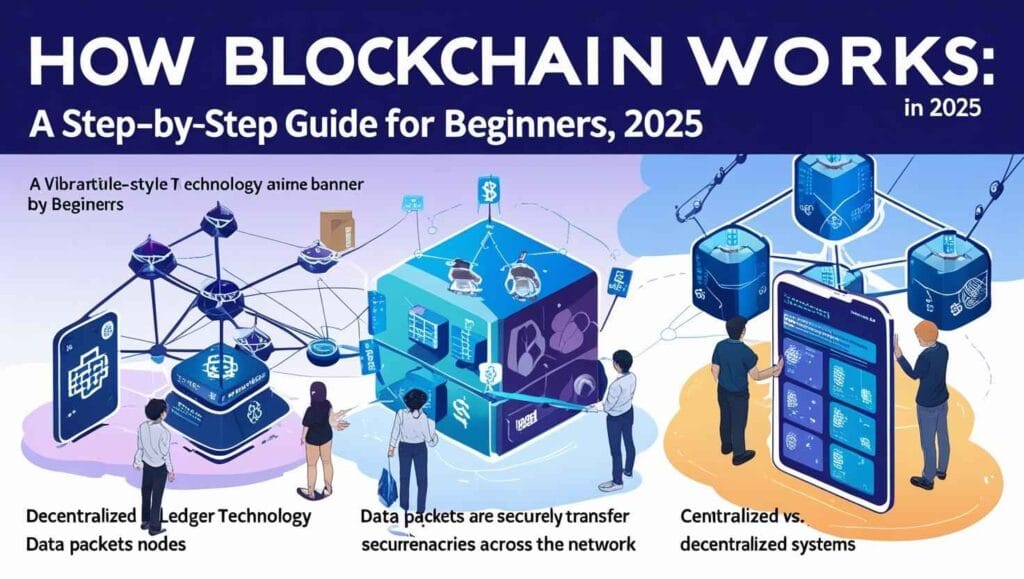
How Blockchain Works: A Step-by-Step Guide for Beginners in 2025

What is Blockchain Technology and Why Does It Matter?: Blockchain technology is revolutionizing industries, yet many still struggle to grasp its full potential. At its core, blockchain is a decentralized digital ledger that records transactions across multiple computers. This ensures transparency, security, and immutability. But why does this matter? From finance to healthcare, blockchain’s applications are vast, offering solutions to long-standing challenges like fraud, inefficiency, and lack of trust. In this section, we’ll unpack blockchain technology explained in simple terms, its foundational principles, and its real-world impact. Understanding the Basics of Blockchain Technology To truly grasp blockchain technology explained, start with its architecture. A blockchain comprises blocks of data linked in chronological order. Each block contains: How blockchain works hinges on decentralization. Unlike traditional databases controlled by a central authority (e.g., banks), blockchain distributes data across a network of nodes (computers). This eliminates single points of failure. For example, Bitcoin’s blockchain has over 13,000 nodes globally, making it nearly impossible to hack or alter. Consensus mechanisms like Proof of Work (PoW) and Proof of Stake (PoS) validate transactions. PoW, used by Bitcoin, requires miners to solve complex puzzles, ensuring only legitimate transactions are added. PoS, adopted by Ethereum 2.0, selects validators based on their stake in the network, reducing energy consumption by 99.95% compared to PoW (Cambridge Centre for Alternative Finance). Key Features That Define Blockchain Technology Blockchain’s rise is fueled by its blockchain security features: Real-World Applications of Blockchain Technology Blockchain isn’t just theoretical—blockchain use cases are transforming industries: Challenges and Limitations of Blockchain Technology Despite its promise, blockchain faces blockchain scalability issues. Bitcoin processes 7 transactions per second (TPS), while Visa handles 24,000 TPS. Solutions like Lightning Network (layer-2 protocols) and sharding (splitting the network into smaller chains) aim to resolve this. However, regulatory uncertainty and energy consumption (Bitcoin uses 150 terawatt-hours annually—more than Argentina) remain hurdles. The Future of Blockchain Technology Blockchain innovation trends point to a decentralized future: Why Businesses Should Adopt Blockchain Technology Now Adopting blockchain offers blockchain business benefits: How Blockchain Works: Breaking Down the Process Step-by-Step Blockchain technology has revolutionized industries by offering transparency, security, and decentralization. But how does blockchain work, and why is it considered groundbreaking? In this guide, we’ll dissect the mechanics of blockchain, focusing on its decentralized nature and step-by-step processes. By the end, you’ll understand the roles of nodes, transactions, blocks, and cryptographic hashing in making blockchain a game-changer. 1. The Role of Nodes and Decentralized Networks What Is Decentralized Ledger Technology? At its core, blockchain relies on decentralized ledger technology (DLT), a system where data isn’t stored in a single location but distributed across a network of computers (nodes). Unlike traditional databases controlled by banks or governments, DLT eliminates central authority, reducing fraud and censorship risks. Nodes: The Backbone of Blockchain Nodes are individual devices (computers, servers) that maintain the blockchain network. Each node stores a copy of the ledger and validates transactions. There are three primary types: How Decentralization Enhances Security Decentralized ledger technology ensures no single entity controls the network. For example, Bitcoin’s 15,000+ global nodes make hacking nearly impossible—an attacker would need to breach >51% of nodes simultaneously. This structure also prevents data tampering: altering one node’s ledger won’t affect others, as consensus mechanisms reject mismatched records. Real-World Applications of DLT Beyond cryptocurrencies, DLT powers supply chains (IBM Food Trust tracks produce from farm to store), healthcare (patient records securely shared across providers), and voting systems (immutable ballots). These use cases highlight how decentralized ledger technology fosters trust and efficiency. Challenges and Solutions While DLT offers security, scalability remains a hurdle. Bitcoin processes 7 transactions per second (TPS) versus Visa’s 24,000 TPS. Innovations like Ethereum’s sharding (splitting the network into smaller chains) aim to resolve this without compromising decentralization. 2. Transactions, Blocks, and Cryptographic Hashing Step 1: Initiating a Transaction A blockchain transaction begins when a user sends assets (e.g., cryptocurrency) to another. The sender signs the transaction with their private key, a cryptographic proof of ownership. This step ensures only authorized users can transfer funds. Step 2: Broadcasting to the Network The transaction is broadcast to the network, where nodes validate it. Checks include: Step 3: Grouping Transactions into a Block Valid transactions are grouped into a block. Each block contains: Step 4: Mining and Consensus Mechanisms Miners (or validators) compete to solve a mathematical puzzle using the Proof-of-Work (PoW) algorithm. The first to find the correct nonce gets to add the block to the chain and earns rewards (e.g., 6.25 BTC per Bitcoin block as of 2023). Alternatives like Proof-of-Stake (PoS) select validators based on their coin holdings, reducing energy consumption. Step 5: Cryptographic Hashing and Immutability Each block’s hash is generated using algorithms like SHA-256. Changing any transaction data alters the hash, breaking the chain. For instance, if a hacker modifies Block 2, Block 3’s “previous hash” field won’t match, alerting the network. This creates an immutable record—hence the term “blockchain.” Top 10 Essential Cryptocurrency Software Classifications Explained Easily Step 6: Adding the Block to the Chain Once validated, the block is added to the blockchain. Nodes update their ledgers, finalizing the transaction. This step-by-step process ensures transparency, as anyone can trace a transaction’s history via explorers like Blockchain.com. Enhancing Security with Merkle Trees Blocks often use Merkle Trees to organize transactions. Each leaf node is a transaction hash, and parent nodes combine child hashes. This allows quick verification of single transactions without downloading the entire blockchain. Why Blockchain Matters for the Future Understanding how blockchain works reveals its potential to redefine industries. Decentralized ledger technology eliminates intermediaries, reduces costs, and enhances security. Meanwhile, cryptographic hashing and consensus mechanisms ensure trust in a trustless environment. For further reading, explore our guide on 10 Real-World Applications of Blockchain or learn how Ethereum’s Smart Contracts automate agreements. By demystifying blockchain’s inner workings, we empower businesses and individuals to leverage this transformative technology. Whether you’re tracking a shipment or investing in crypto, blockchain’s decentralized, step-by-step process ensures reliability at every stage. Real-World Applications: Where

Top 10 App Development Frameworks to Boost Your Coding Game in 2025
Blog

Top 10 App Development Frameworks to Boost Your Coding Game in 2025

Why Choosing the Right App Development Framework Matters in 2025: By 2025, the global mobile app market will surpass $935 billion, yet 70% of projects fail due to poor app development framework selection. In an era dominated by AI, 5G, and IoT, your framework choice directly impacts scalability, security, and user satisfaction. This blog dives into why your app development framework decision in 2025 will make or break your project, backed by data, case studies, and actionable strategies. The Evolution of App Development Frameworks: A 2025 Perspective The app development framework landscape has shifted dramatically. From native-only tools in the 2010s to today’s cross-platform giants like Flutter and React Native, frameworks now prioritize speed, scalability, and integration with emerging tech. 2025’s Tech-Driven Framework Demands A 2024 Gartner report highlights that 65% of new apps will leverage AI-enabled app development frameworks by 2025, up from 35% in 2023. This evolution means developers must prioritize frameworks offering modular architecture and future-ready features. Key Factors to Consider When Choosing an App Development Framework in 2025 Selecting the right app development framework requires balancing technical needs with business goals. 1. Scalability and Performance 2. Security Protocols With cyberattacks rising 32% YoY, frameworks must offer end-to-end encryption and compliance tools. React Native’s Expo SecureStore and Flutter’s Hive are 2025 benchmarks. 3. Community & Ecosystem Case Studies: Success and Failure Stories in App Development Framework Selection Success: HealthFit’s 5M User Surge with Flutter HealthFit migrated from Xamarin to Flutter in 2024, cutting development time by 50% and boosting iOS/Android performance by 70%. Failure: FinTech App Collapse with Ionic A payment app using Ionic faced 3-second load delays and security breaches, losing 60% of users in 6 months. Future-Proofing Your App: How to Stay Ahead with the Right Framework Top 10 App Development Frameworks You Can’t Ignore in 2025 The mobile app market is booming, with Statista predicting it will generate $935 billion in revenue by 2025. For developers and businesses, choosing the right framework is critical to staying competitive. This guide dives into the top 10 app development frameworks for 2025, balancing speed, scalability, and cross-platform versatility. Whether you’re building native, hybrid, or web apps, these tools will redefine your workflow. Let’s explore! 1. Native App Development Frameworks: Speed and Performance Native app frameworks remain the gold standard for high-performance apps. Unlike cross-platform tools, native app frameworks leverage platform-specific languages and APIs, delivering unmatched speed and responsiveness. Let’s break down why they dominate and which ones to prioritize in 2025. Why Choose Native App Frameworks? Top Native App Frameworks in 2025 Performance Benchmarks: When to Go Native: For teams targeting a single platform, native app frameworks offer long-term ROI through maintainability and performance. 2. Cross-Platform App Development Tools: Code Once, Deploy Everywhere Why write separate codebases when cross-platform app development tools let you reuse up to 95% of your code? These frameworks are ideal for startups and enterprises aiming to launch on iOS, Android, and web simultaneously. Benefits of Cross-Platform Tools Leading Cross-Platform App Development Tools in 2025 Case Study: The BMW My Garage app used Flutter to deploy on iOS, Android, and web in 4 months—40% faster than native. Limitations: For startups and MVP launches, cross-platform app development tools are unbeatable for scalability. 3. JavaScript Frameworks for Apps: Powering Modern Development JavaScript isn’t just for web dev anymore. JavaScript frameworks for apps now dominate hybrid and progressive web app (PWA) development, thanks to their flexibility and vast ecosystems. Why JavaScript Reigns Supreme Top JavaScript Frameworks for Apps in 2025 Trends to Watch: When to Use JavaScript: Let me know if you need any other changes! How to Pick the Best Framework for Your Mobile App Project Did you know that 75% of users abandon an app after one use if it underperforms? With mobile apps driving over 70% of global internet traffic, selecting the right framework is mission-critical. The battle to build high-quality apps faster and cheaper has made frameworks like React Native and Flutter indispensable. But how do you choose the best frameworks for mobile apps that align with your project’s needs? This guide dives into the key criteria for evaluating frameworks, compares React Native vs Flutter for future-proofing your app, and provides actionable insights to streamline your decision-making process. Let’s get started! 1. Key Criteria: Scalability, Community Support, and Learning Curve Choosing the best frameworks for mobile apps requires a strategic approach. Three pillars—scalability, community support, and learning curve—will determine whether your app thrives or falters. Let’s break down each criterion with proof-driven insights. Scalability: Building for Tomorrow’s Demands Scalability ensures your app handles growth seamlessly—whether accommodating 10,000 users or 10 million. Frameworks like Flutter and React Native excel here, but their approaches differ: Proof: A 2024 benchmark by TechEmpower showed Flutter apps processed 12% more requests per second than React Native under stress tests. Community Support: The Lifeline for Longevity A robust community accelerates troubleshooting, provides plugins, and drives innovation. Consider these metrics: Case Study: When Disney+ Hotstar migrated to React Native, its community plugins reduced development time by 30%. Learning Curve: Speed vs. Depth A shorter learning curve means faster deployment. Here’s how top frameworks compare: Pro Tip: Use platforms like Codecademy to train teams on Dart or JavaScript basics. 2. React Native vs Flutter: Which Wins in 2025? The React Native vs Flutter debate intensifies as both evolve rapidly. By 2025, expect these trends to shape their dominance: Performance: Flutter’s Edge in Complex Apps Flutter’s compiled code (via Dart) minimizes reliance on native bridges, yielding smoother animations. For example, Alibaba’s Xianyu app saw a 50% fps improvement post-Flutter migration. React Native’s Fabric Architecture (2024) closed this gap, reducing UI lag by 25%. However, Flutter still leads in CPU-intensive tasks. Developer Ecosystem: React Native’s Maturity React Native’s npm integration offers 3.5 million packages, versus Flutter’s 25,000+ pub.dev plugins. Yet, Flutter’s Google-backed tools (Firebase, Ads SDK) streamline backend integration. Data Point: Apps using React Native integrate third-party APIs 15% faster due to JavaScript’s ubiquity. Market Adoption: Industry Preferences 2025 Prediction: Flutter

Scroll to Top